PuzzleFree
Jigsaw Puzzles: Relaxing Stress Relief for Adults
January 9, 2026
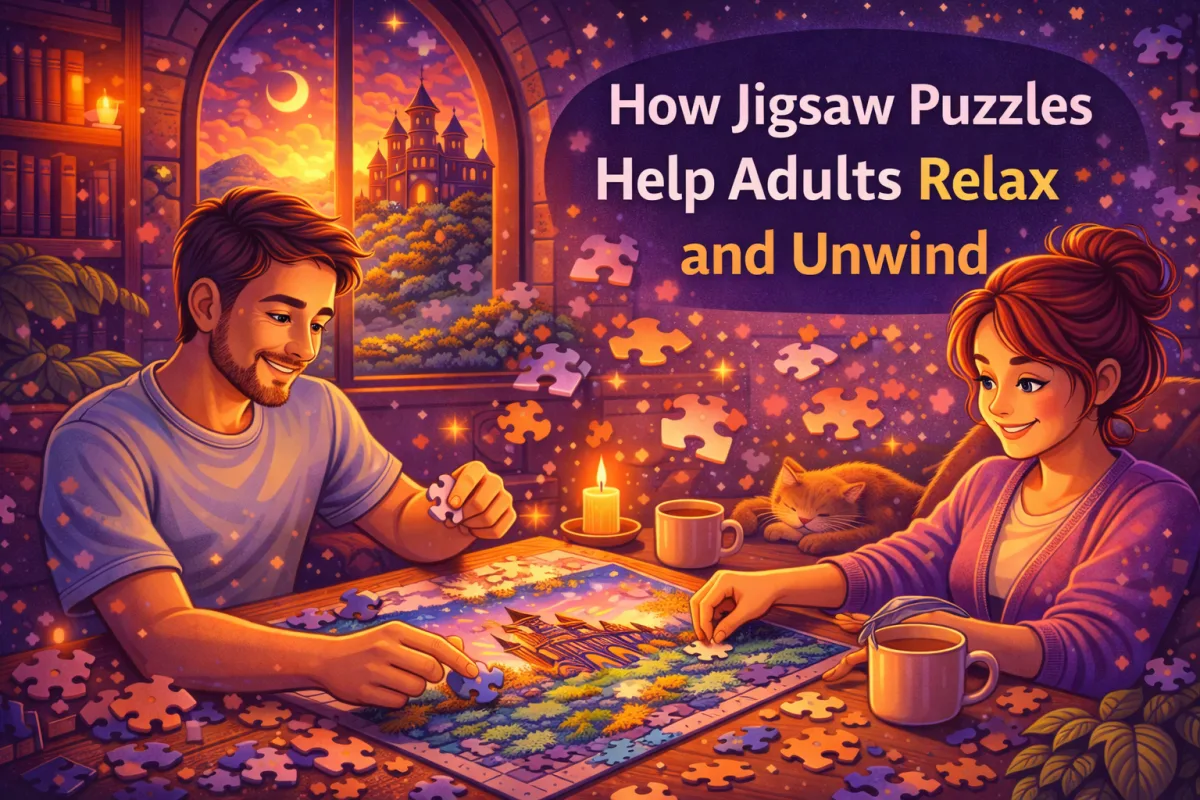
Jigsaw puzzles are a structured, low-pressure activity that helps adults slow down, focus attention, and release mental tension. As a concept, jigsaw puzzle solving combines visual problem-solving with calm repetition, making it especially effective for relaxation and emotional recovery.
This article explains how jigsaw puzzles support relaxation for adults, what happens mentally during puzzle solving, and why this hobby fits naturally into modern, busy lifestyles.
Why Relaxation Looks Different for Adults
For adults, relaxation is not about complete mental shutdown. After work, decision-making, and constant information input, the mind often needs gentle structure rather than passive distraction.
Activities that are too stimulating can increase fatigue, while activities that are too passive may leave the mind restless. Jigsaw puzzles sit between these extremes.
Jigsaw Puzzles as a Relaxation Tool
Jigsaw puzzles are a form of focused leisure. The task is clear, the rules are simple, and progress is visible. This combination creates a stable mental environment that supports relaxation.
“Relaxation does not always come from doing nothing, but from doing one thing well.”
Clear Goals Without Pressure
Each puzzle has a single objective: complete the image. There are no time limits, scores, or penalties. This removes performance pressure while still providing direction.
Repetitive, Soothing Actions
Sorting pieces, matching edges, and recognizing patterns involve small, repeated actions. Repetition helps calm the nervous system and creates a steady rhythm.
How Puzzle Solving Affects the Mind
Focused Attention and Mental Quiet
When solving a puzzle, attention naturally narrows. The brain focuses on shapes, colors, and spatial relationships, leaving less room for intrusive thoughts.
This focused state is similar to mindfulness, but without requiring formal practice.
Reduced Cognitive Load
Daily life demands constant decision-making. Jigsaw puzzles reduce cognitive load by limiting choices to a small, manageable set.
Instead of juggling multiple tasks, the mind concentrates on one visual problem at a time.
Emotional Benefits of Jigsaw Puzzles
A Sense of Control and Progress
Completing sections of a puzzle provides visible progress. This reinforces a sense of control, which is often missing in stressful situations.
Safe Engagement Without Overstimulation
Unlike fast-paced games or endless content feeds, puzzles do not rely on constant novelty. The experience remains calm and predictable.
Comparing Jigsaw Puzzles to Other Relaxing Activities
| Activity | Mental Engagement | Stress Reduction | Ease of Pausing |
|---|---|---|---|
| Jigsaw puzzles | Moderate | High | High |
| Watching videos | Low | Low to moderate | High |
| Reading | Moderate | Moderate | Medium |
| Fast-paced games | High | Low | Low |
This balance of engagement and calm makes puzzles especially effective for unwinding.
Physical and Online Jigsaw Puzzles
Traditional Physical Puzzles
Physical puzzles add tactile feedback and can become a shared activity. They work well for long, uninterrupted sessions.
Online Jigsaw Puzzles
Online puzzles offer flexibility and instant access. They allow adults to relax without setup or storage, fitting easily into short breaks.
Platforms such as PuzzleFree.Game show how digital puzzles can preserve the calming qualities of traditional puzzle solving.
Why Jigsaw Puzzles Fit Modern Adult Life
Modern adults often have limited, fragmented free time. Jigsaw puzzles can be paused and resumed without losing context, making them adaptable to real schedules.
This flexibility helps transform relaxation from an occasional event into a consistent habit.
Conclusion
Jigsaw puzzles help adults relax and unwind by combining focused attention, gentle repetition, and visible progress. They reduce mental noise without demanding high energy or constant stimulation.
As a steady, flexible hobby, puzzle solving offers a practical way for adults to restore balance and mental calm in everyday life.