PuzzleFree
1000 Piece Puzzle: How Long to Finish (6-12 hrs)
February 23, 2026
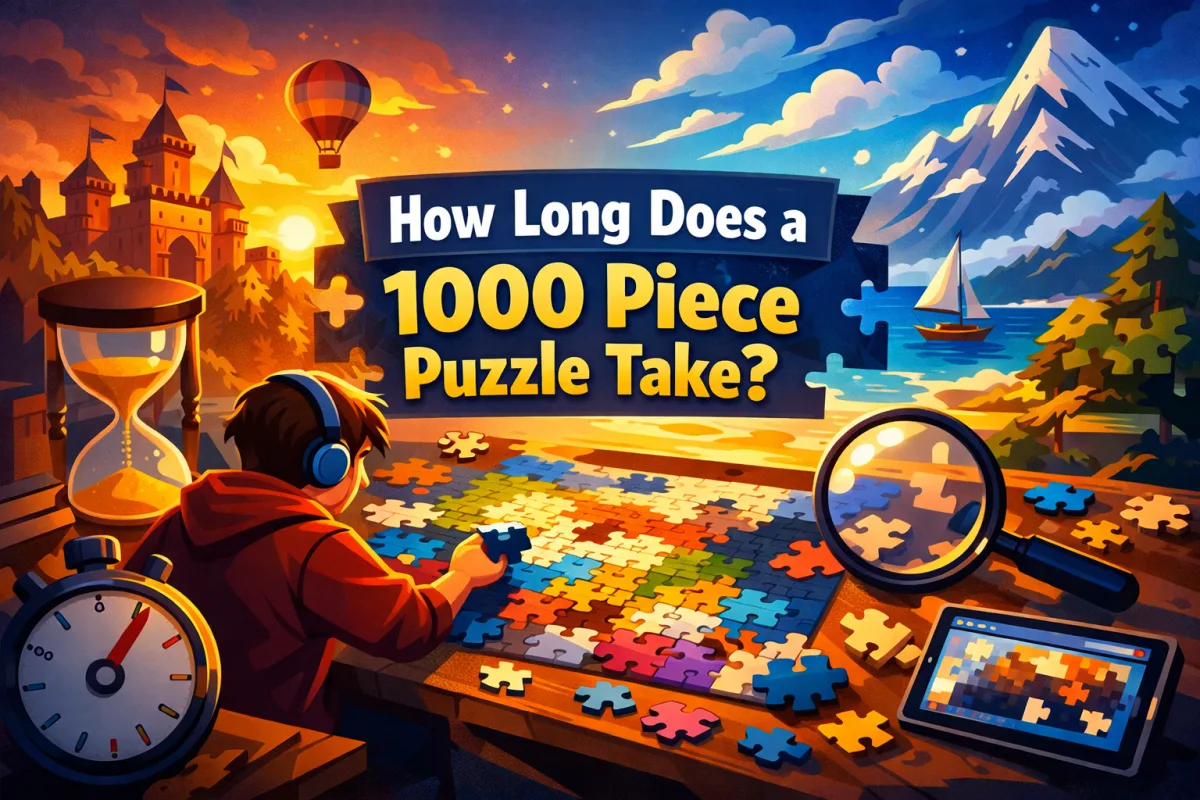
If you're planning to start a 1000 piece puzzle, the most common question is simple: how long does a 1000 piece puzzle take to complete?
The realistic answer:
For most adults, a 1000 piece puzzle takes 6 to 12 hours on average.
However, completion time depends on experience level, image complexity, piece cut style, and solving strategy. In this guide, we break down the average time for a 1000 piece puzzle, what affects puzzle completion time, and whether solving online jigsaw puzzles changes the experience.
Average Time to Complete a 1000 Piece Puzzle
Here is a realistic breakdown:
| Skill Level | Estimated Time | Description |
|---|---|---|
| Beginner | 10–20 hours | First large puzzle, limited strategy |
| Casual puzzler | 6–12 hours | Some experience, basic sorting skills |
| Experienced solver | 4–8 hours | Uses structured techniques |
| Speed puzzler | 2–4 hours | Competitive or advanced strategy |
Most people complete a 1000 piece puzzle over multiple sessions, spending 1–2 hours per sitting. The average time for a 1000 piece puzzle usually lands around 8–10 hours for casual adults.
What Affects Puzzle Completion Time?
Not all 1000 piece puzzles are equal. Some feel manageable, others extremely challenging. Several factors influence puzzle solving speed.
Image Complexity
The image matters more than the piece count.
Easier designs:
- Clear color sections (sky, trees, buildings)
- Strong contrast
- Distinct objects
Harder designs:
- Large monochrome areas
- Subtle gradients
- Snow scenes
- Ocean or sky with minimal detail
A colorful cityscape may take 6–8 hours.
A soft blue gradient scene could easily push the puzzle completion time to 15+ hours.
Piece Shape & Cut Style
Piece shape variation impacts difficulty significantly.
- Random-cut puzzles are harder.
- Grid-cut puzzles are more predictable.
- Unique piece shapes slow down beginners.
More uniform shapes reduce decision fatigue and improve puzzle solving speed.
Experience Level
A beginner puzzler often works randomly, testing pieces by trial and error. An experienced solver uses systems:
- Edge sorting first
- Color grouping strategy
- Section building
- Working in zones
Strategy alone can cut completion time in half.
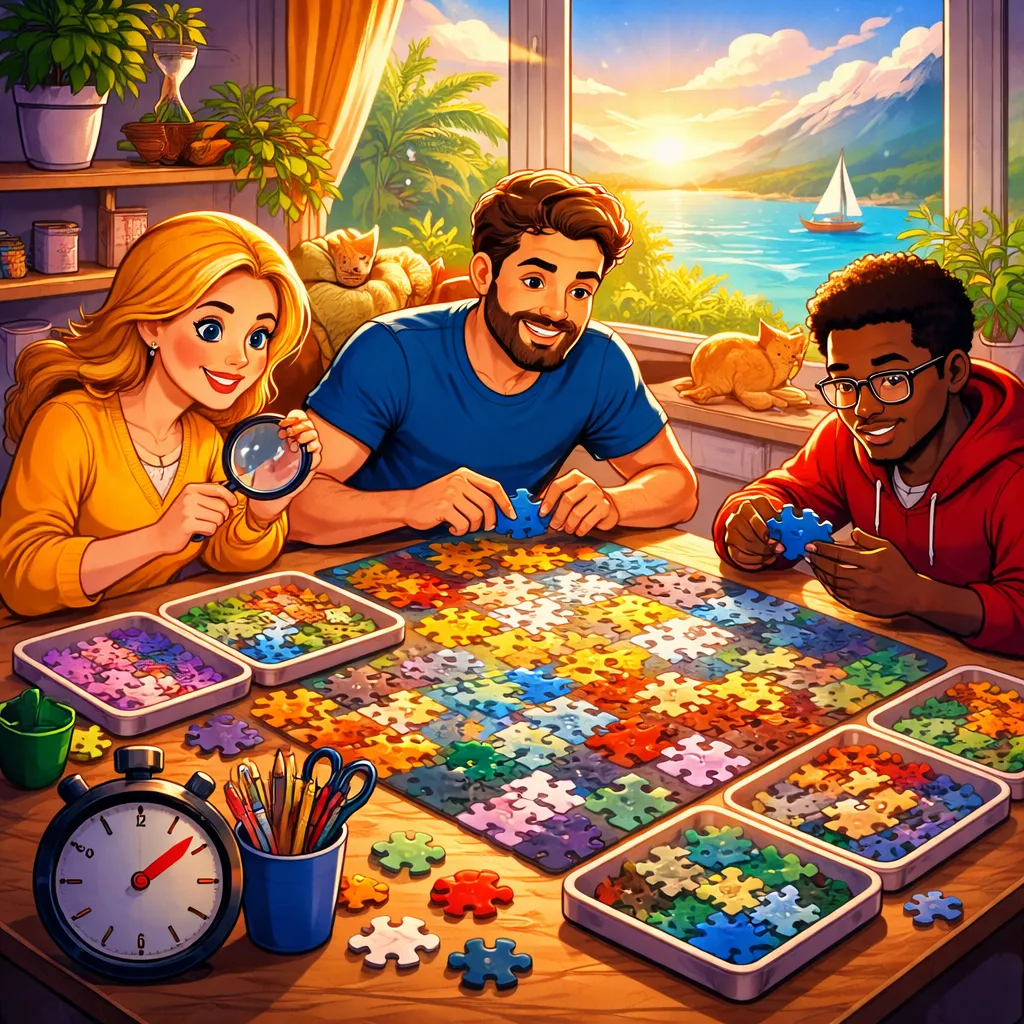
Workspace & Organization
Physical puzzles require space.
- Large table improves sorting
- Good lighting increases mental focus
- Organized layout speeds placement
Digital puzzle experience removes many of these limitations.
500 vs 1000 Piece Puzzle: Time Comparison
Many players ask whether 1000 pieces is dramatically harder than 500.
| Piece Count | Average Time | Difficulty Level |
|---|---|---|
| 300 pieces | 2–5 hours | Easy |
| 500 pieces | 4–8 hours | Moderate |
| 1000 pieces | 6–15 hours | Challenging |
A 1000 piece puzzle is not just double the work of 500 pieces. Complexity increases exponentially because:
- More visual similarity
- More color overlap
- Higher cognitive load
For beginners, jumping from 500 to 1000 pieces can feel like a major leap.
Is a 1000 Piece Puzzle Hard?
It depends on your starting point.
For Beginners
Yes, it can feel overwhelming. Expect 10–20 hours if you are new to puzzling.
For Intermediate Solvers
A 1000 piece puzzle is a balanced challenge. It requires focus but remains relaxing.
For Experienced Puzzlers
It becomes a structured task rather than a struggle. Completion time often drops below 6 hours.
Does Online Puzzle Time Differ?
Yes — often significantly.
Digital puzzles typically take less time because:
- Pieces auto-snap when placed correctly
- Zooming improves visibility
- Sorting tools help group colors
- No missing pieces
- No physical setup time
Many players report shaving 20–30% off their average time when solving online jigsaw puzzles.
If you want to test your speed digitally, you can try online jigsaw puzzles here:
https://puzzlefree.game/pages/online-jigsaw-puzzle-play-free-in-your-browser
Online solving reduces friction and makes large piece counts more accessible.
How to Complete a 1000 Piece Puzzle Faster
If you want to reduce puzzle completion time, use structured methods.
1. Start with the Edges
Build the frame first. It gives spatial boundaries and immediate progress.
2. Sort by Color
Group similar shades and patterns before placing pieces.
3. Identify “Anchor Sections”
Find distinctive elements like faces, text, or bright objects.
4. Work in Sections
Complete one visual zone at a time instead of randomly testing pieces.
5. Avoid Forced Placement
If a piece almost fits, it’s probably wrong. Forcing pieces wastes time.
These strategies improve puzzle solving speed and reduce frustration.
Is a 1000 Piece Puzzle Good for Beginners?
It can be — if you choose the right image.
For first-timers, look for:
- High contrast
- Clear objects
- No large monochrome zones
If unsure, start with 500 pieces and then move up.
You can browse all puzzles by difficulty and image type here:
https://puzzlefree.game/puzzles
How Many Days Should You Plan?
If you solve 1–2 hours per day:
- 6-hour puzzle → 3–4 days
- 10-hour puzzle → 5–7 days
- 15-hour puzzle → up to 2 weeks casually
Many adults prefer spreading a 1000 piece puzzle over several evenings as a relaxing hobby.
For a lighter daily challenge, you can try the daily puzzle here:
https://puzzlefree.game/pages/daily-jigsaw-puzzle-play-a-new-puzzle-every-day
Why 1000 Pieces Is the “Standard” Challenge
A 1000 piece puzzle hits a psychological sweet spot:
- Long enough to feel meaningful
- Challenging but achievable
- Requires mental focus
- Provides strong satisfaction on completion
This size became the industry standard for adult puzzles because it balances difficulty and reward.
If you're looking specifically for puzzles for adults with higher complexity, explore:
https://puzzlefree.game/pages/jigsaw-puzzles-for-adults-online
Final Answer: How Long Does a 1000 Piece Puzzle Take?
For most people:
- 6–12 hours total
- Spread over multiple sessions
- Faster online than offline
- Highly dependent on image complexity
If you are a beginner, plan closer to 10–15 hours.
If experienced, expect around 6 hours or less.
The key is not speed — it’s enjoyment. A 1000 piece puzzle is designed to challenge your mind, improve mental focus, and provide a satisfying sense of accomplishment.
FAQ
How long does a 1000 piece puzzle take for beginners?
Usually 10–20 hours depending on image complexity and solving strategy.
Is 1000 pieces too hard?
Not necessarily. With the right image and structured approach, it is challenging but achievable.
What is the fastest time recorded for a 1000 piece puzzle?
Competitive speed puzzlers can finish in 2–4 hours under controlled conditions.
Is it easier online or offline?
Online puzzles are generally easier due to auto-snap features and digital tools.
How many hours per day should I plan?
1–2 hours per day is ideal for steady progress without burnout.
Tip: If you’re curious how your time compares, try a digital version and measure your speed. A 1000 piece puzzle might take less time than you expect — especially with the right strategy.