PuzzleFree
Remove Ads from Jigsaw Puzzles: Get Ad-Free Play
January 8, 2026
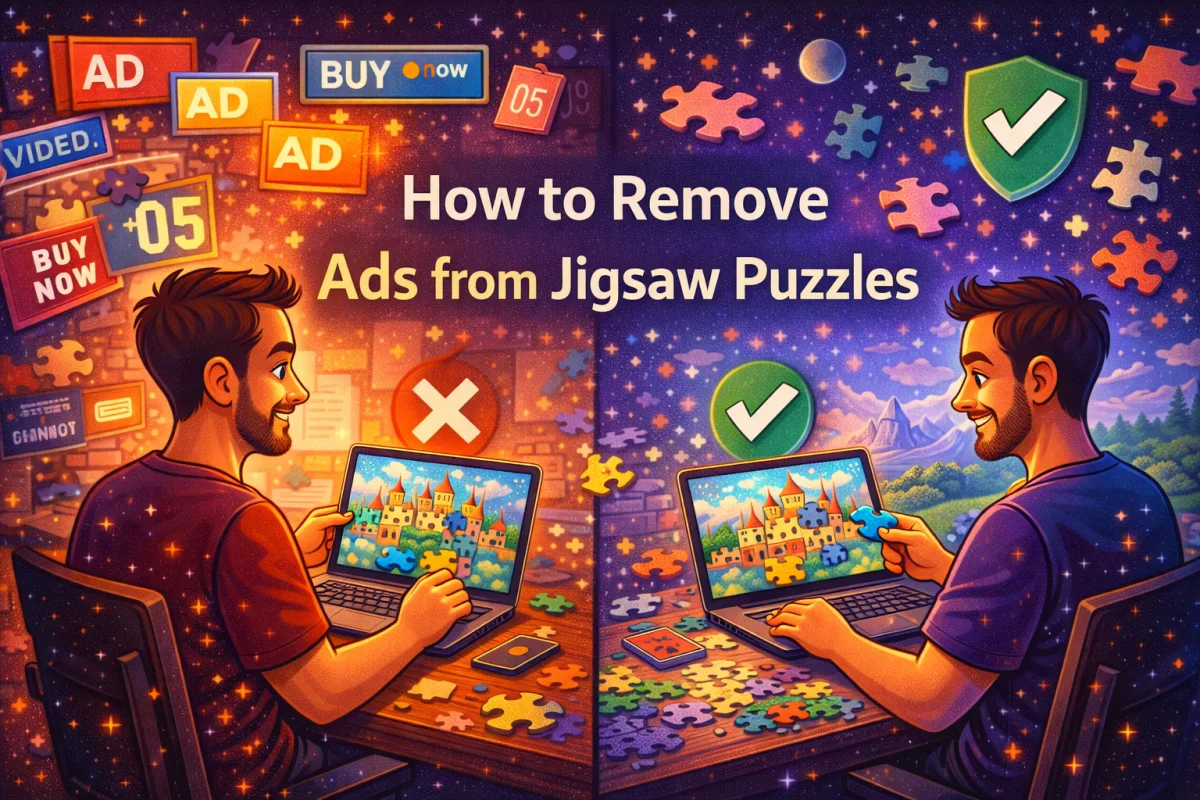
Ads in jigsaw puzzles can quickly turn a relaxing activity into a frustrating one. Pop-ups, video interruptions, and banner distractions break concentration and reduce the calming effect puzzles are meant to provide. In this article, we’ll explain how ads work in jigsaw puzzle games, why they exist, and what practical options you have to remove or avoid them.
What Does “Removing Ads from Jigsaw Puzzles” Actually Mean?
Removing ads from jigsaw puzzles usually means one of three things:
- eliminating banner or video ads during gameplay
- preventing forced ad interruptions between puzzle stages
- avoiding tracking-based ads that slow down performance
This is not a technical hack. In most cases, it’s a design and platform choice made by the puzzle provider.

Why Do Most Puzzle Games Show Ads?
Ads are the most common way free puzzle apps and websites earn revenue. Since puzzles don’t require constant content updates like competitive games, ads help cover hosting, development, and licensing costs.
Common Types of Ads in Puzzle Games
- banner ads below or beside the puzzle board
- full-screen ads between puzzles
- rewarded video ads for hints or extra features
“Ads are not a bug in puzzle games — they are often a business model choice.”
Method 1: Use an Ad-Free Puzzle Platform
The most reliable way to remove ads is to choose a platform that simply doesn’t include them. Some puzzle services are designed around distraction-free play, even for free users.
For example, PuzzleFree.Game is built without ads during gameplay. Even when playing for free, puzzles are not interrupted by banners or video ads. This approach treats puzzles as a focused activity rather than an attention-driven product.
Method 2: Paid Versions or Subscriptions
Many mobile puzzle apps offer an ad-free mode through a one-time purchase or subscription. This usually removes:
- interstitial ads
- reward-based ads
- tracking scripts used for ad targeting
The downside is that ad-free access is often locked behind recurring payments, even if you only want to solve puzzles occasionally.
Method 3: Browser-Based Play Instead of Apps
Playing jigsaw puzzles directly in a browser often reduces ad pressure compared to mobile apps. Browser platforms can rely on simpler infrastructure and don’t always depend on aggressive monetization.
Why Browser Puzzles Are Often Cleaner
- fewer forced video ads
- no app-level tracking permissions
- better performance on larger screens
Method 4: Technical Ad Blocking (With Limitations)
Ad blockers can hide banners on some puzzle websites, but this method has clear limits:
- many apps ignore system-wide ad blockers
- some sites restrict access when ads are blocked
- video ads embedded in apps often bypass blockers
Ad blocking works inconsistently and can break puzzle interfaces or features.
Comparing Ad Removal Options
| Method | Effectiveness | Downsides |
|---|---|---|
| Ad-free platform | High | Limited platform choice |
| Paid subscription | High | Ongoing cost |
| Browser-based puzzles | Medium–High | Fewer app-style features |
| Ad blockers | Low–Medium | Unreliable, may break gameplay |
Why Ad-Free Puzzles Matter for Focus and Relaxation
Jigsaw puzzles rely on sustained attention, pattern recognition, and calm repetition. Ads interrupt this mental flow and reduce the cognitive benefits puzzles are known for.
Ad-free puzzle environments support:
- longer focus sessions
- lower stress levels
- more consistent enjoyment
Final Thoughts
Removing ads from jigsaw puzzles is less about technical tricks and more about choosing the right environment. Whether that means using a browser-based service, paying for an ad-free version, or selecting a platform that never included ads in the first place, the goal is the same: uninterrupted, focused puzzle-solving.
When puzzles are treated as a mindful activity instead of an ad delivery system, they return to what they’re meant to be — calm, engaging, and rewarding.