PuzzleFree
Are Online Puzzles Worth It? Practical No-Hype Guide
December 27, 2025
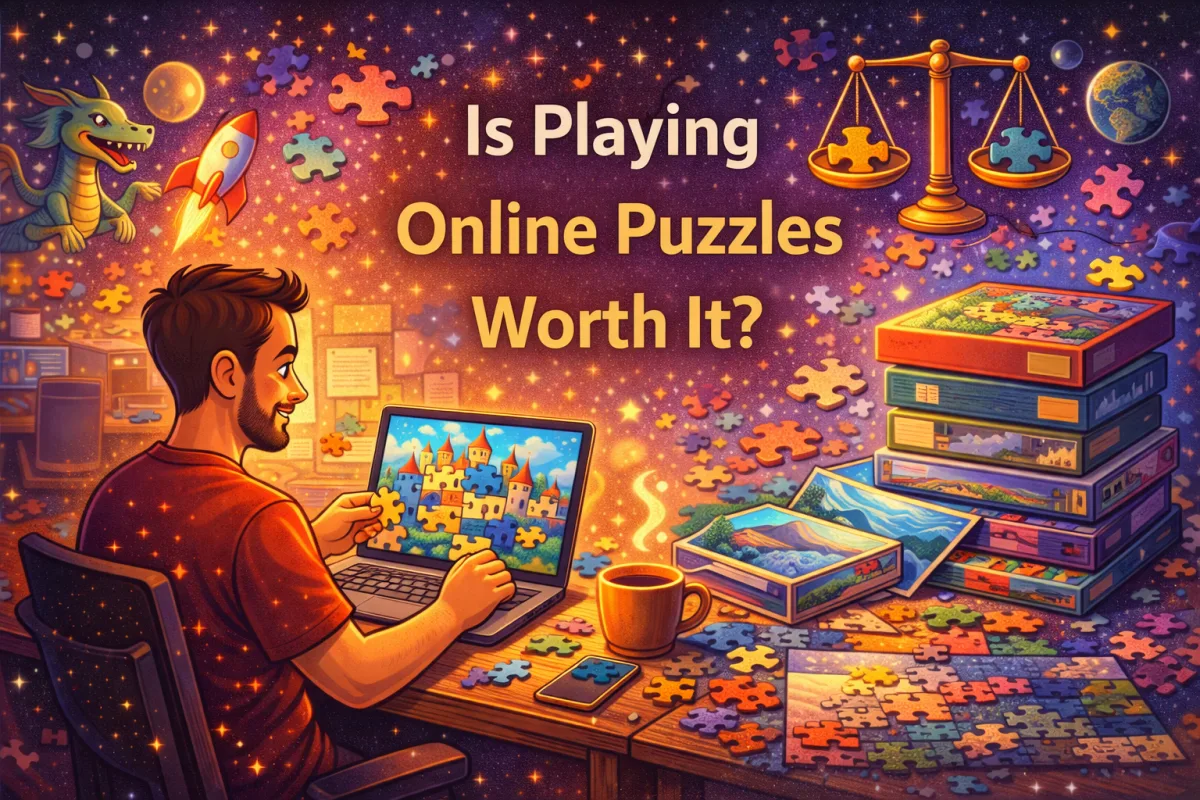
Online puzzle games look simple: open a browser, pick an image, and start solving. But is playing an online puzzle actually worth your time compared to physical jigsaws, other games, or just taking a break? The short answer is yes — for many people. The longer answer depends on what you want: relaxation, brain training, convenience, or a low-cost hobby. In this guide, we’ll break it down step by step so you can decide with confidence.
What “Worth It” Means for Puzzle Players
Before comparing anything, define your goal. Most puzzle players fall into one of these groups:
- Relaxation: you want calm focus and a mental reset
- Brain training: you want better attention, memory, and pattern recognition
- Convenience: you want to play anywhere, anytime
- Value: you want lots of puzzles without buying boxes
“The best puzzle is the one you can actually start — right now — without friction.”

The Real Benefits of Online Puzzle Games
1. Instant Access, No Setup
With physical puzzles, you need space, time, and cleanup. Online puzzles remove the friction: click and play. This is especially valuable if you solve puzzles in short sessions.
2. Adjustable Difficulty That Matches Your Mood
Many online puzzle platforms let you choose piece counts and difficulty. That means you can solve a quick 36–100 piece puzzle during a break, or go deep with 225–400 pieces when you want a longer challenge.
3. Consistent Brain Training
Online puzzles still train the same core skills as physical ones:
- visual-spatial reasoning
- attention control and focus
- working memory (remembering colors, shapes, positions)
- problem solving through trial and elimination
The main difference is volume: online play makes it easier to solve more puzzles consistently, which is what improves skills over time.
4. Better for Stress Relief Than “Scrolling Breaks”
Many people take breaks by scrolling social media, reading news, or watching short videos. These activities often increase mental noise. Online puzzles are structured, calm, and predictable, which helps your brain recover without overstimulation.
Online vs. Physical Puzzles: What You Gain and What You Lose
| Factor | Online Puzzles | Physical Puzzles |
|---|---|---|
| Setup & cleanup | Instant | Time + space required |
| Cost per puzzle | Often free or low-cost | Usually paid per box |
| Portability | Anywhere (phone/tablet/laptop) | Limited by box and space |
| Physical satisfaction | Lower (no tactile feel) | High (real pieces) |
| Variety | Very high | Depends on purchases |
So yes, online puzzles are worth it if you value convenience and variety. Physical puzzles still win if you love the tactile feel and the “table ritual.”
How to Make Online Puzzle Play Actually Worth Your Time
Online puzzles become much more rewarding when you play with intention instead of randomly clicking around.
Step 1: Pick the Right Puzzle Type
- If you want calm: landscapes, flowers, seasonal scenes
- If you want challenge: textures, architecture, space
- If you want fun: cartoons, fantasy, animals
Step 2: Choose a Session Length
Use puzzle size as a timer:
- 36–64 pieces: 3–8 minutes
- 100–144 pieces: 10–20 minutes
- 225–400 pieces: longer focus session
Step 3: Track Progress Like a Maker
If you enjoy improvement, treat it like a small skill:
- solve similar categories weekly
- increase piece count gradually
- notice which images slow you down and why
Where PuzzleFree.Game Fits In
Online puzzle play is only “worth it” if the platform is smooth and doesn’t waste your time. PuzzleFree.Game is built for fast, frictionless puzzle sessions: you can play many puzzles for free, often without registration, and choose a difficulty level that fits your schedule. The puzzle library keeps growing, with new puzzles added regularly.
Conclusion: Yes, If You Use It the Right Way
Playing online puzzles is worth it if you want a calm, practical activity that improves focus and gives your brain a clean break. It’s especially valuable for busy people who don’t have space or time for physical puzzles every day. If you miss the tactile feel, keep a physical puzzle for weekends and use online puzzles during the week. The best approach is a hybrid one — and it keeps the hobby enjoyable year-round.