PuzzleFree
Jigsaw Puzzles for Kids & Adults - Why They Work
February 10, 2026
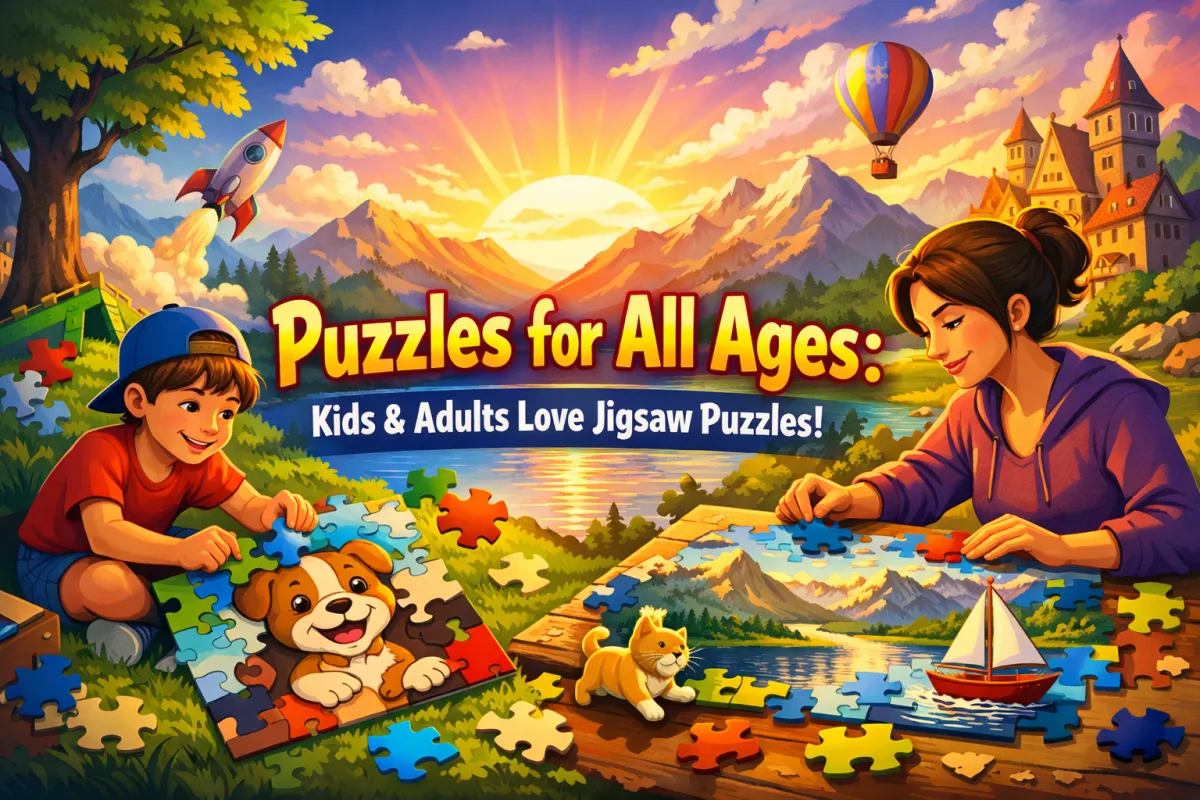
Puzzles really are “for everyone” — not as a slogan, but as a practical fact. A jigsaw can be quick and light, or slow and challenging. It can be a calm solo activity after a long day, or a simple family ritual that doesn’t require planning, special gear, or a big budget. And thanks to online jigsaw puzzles, it’s easier than ever to choose the right style for your mood, time, and age group.
In this guide, we’ll look at what typically makes puzzles feel enjoyable for kids vs adults, how to pick difficulty without frustration, and which puzzle styles tend to work best at different ages. Along the way, you’ll also find two handy “start here” pages: one for adults and one for kids.
Key Takeaways
- Puzzles scale naturally: the same idea works for kids, adults, and families — you just adjust difficulty and image style.
- Online puzzles reduce friction: no missing pieces, no storage, no setup — start in seconds.
- Image choice matters as much as piece count: contrast and clear zones often decide whether it feels fun or slow.
- Make it a habit gently: short sessions (5–15 minutes) can still feel complete.
Why “Puzzles for All Ages” Is More Than a Cute Phrase
Jigsaw puzzles have stayed popular for generations because they’re flexible. You can do one small session and stop, or you can sink into a longer, more immersive build. Some people enjoy puzzles as a quiet break. Others treat it like a satisfying challenge. Both are valid, and both can exist in the same household.
What’s interesting is how the same puzzle activity can feel totally different depending on context. Ten minutes in the morning can be a calm reset. Thirty minutes at night can be a slow unwind. And a weekend session can become a shared routine. That’s why puzzles fit so many ages and lifestyles — they adapt.
Kids vs Adults: What Usually Feels “Fun” at Each Age
For kids: clear goals and quick wins
Kids often enjoy puzzles that “move fast” — images with clear objects, big shapes, and strong contrast. The best feeling is progress you can see: edges complete, a character appears, an animal face forms. It keeps motivation high without pressure.
For adults: detail, mood, and a satisfying challenge
Adults often like richer images — landscapes, city streets, cozy interiors, art-style scenes. Many adults don’t want speed. They want a steady, calming rhythm and that “click” feeling when pieces finally fit after a little searching.
For families: shared themes, not shared skill levels
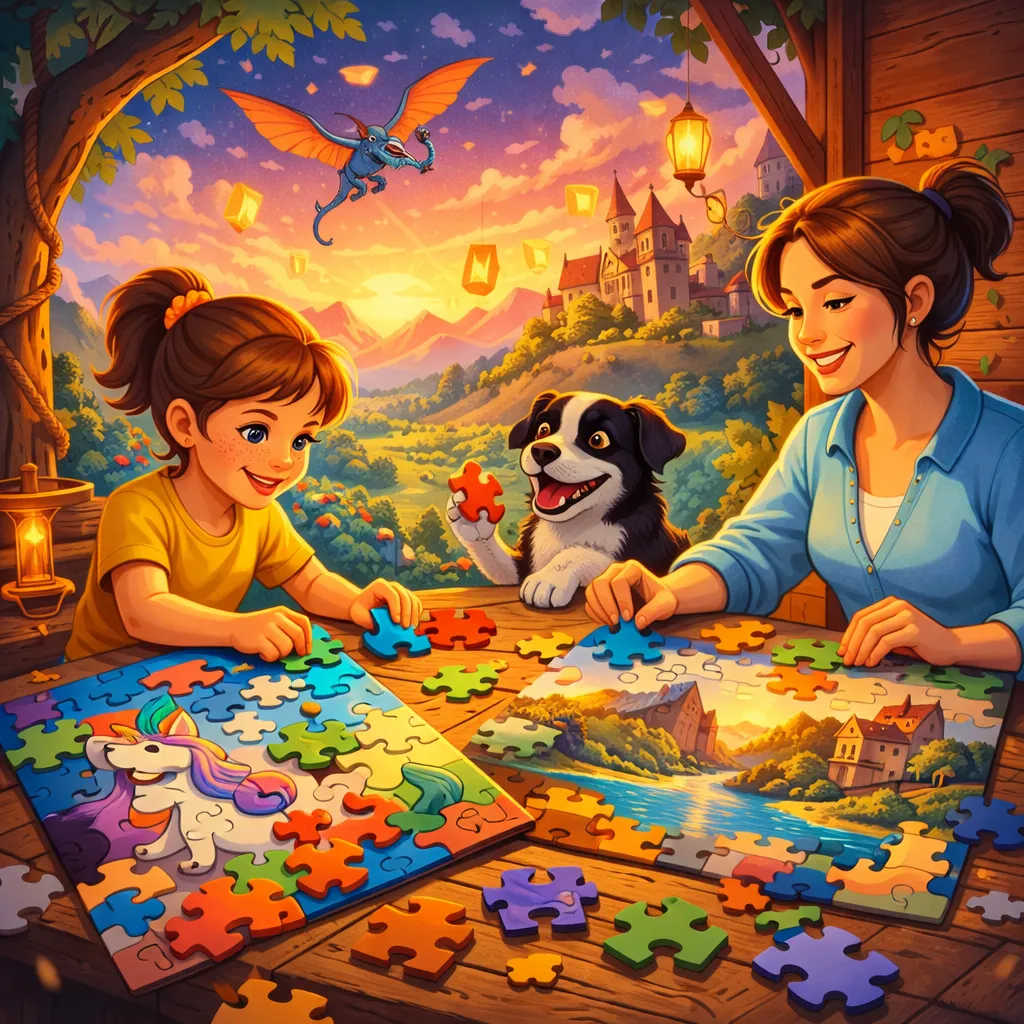
When kids and adults play together, the best approach is choosing a theme everyone likes, then letting each person contribute in their own way. One person can sort edge pieces, another can build the sky, someone else can focus on a specific object. It doesn’t have to be “equal difficulty” to be fun.
Choosing the Right Puzzle Difficulty for Each Age Group
Piece count is a useful shortcut, but it’s not the whole story. A 100-piece puzzle with low contrast can feel slower than a 200-piece puzzle with strong color zones. When people say a puzzle is “too hard,” they often mean the image doesn’t provide enough visual anchors.
Beginner-friendly picks
- High contrast between sections (clear borders between sky/buildings/objects)
- Distinct zones (different colors and textures that help sorting)
- Clear focal points (a character, landmark, or object that stands out)
More challenging picks
- Gradients (big skies, water, soft lighting transitions)
- Repeating patterns (tiles, grass, brick walls, similar textures)
- Busy detail everywhere (harder to “anchor” your progress)
Quick Table: What Usually Works Best by Age Group
| Age group | What often feels fun | Good themes | Difficulty tips |
|---|---|---|---|
| Kids | Fast progress, clear objects | Animals, cartoons, vehicles, food | Pick strong outlines + big color blocks |
| Adults | Steady challenge, calming rhythm | Landscapes, cities, cozy scenes, art | Match difficulty to available time |
| Families | Shared routine, shared theme | Nature, holidays, “story” scenes | Let everyone work on different zones |
Why Online Jigsaw Puzzles Make “All Ages” Easier
Online puzzles remove the tiny barriers that often stop people from starting. You don’t need to clear a table, open a box, or worry about missing pieces. You can do a short session, leave, and come back later. For many people, that’s the main reason online puzzles become a natural habit.
- No setup: open and start.
- No storage: no pile of boxes at home.
- No missing pieces: the puzzle stays complete.
- Short sessions work: 5–15 minutes still feels satisfying.
Puzzle Styles That Work Especially Well for Kids
For kids, the best puzzle images usually have friendly, obvious shapes. Characters, animals, and simple scenes create “targets” that kids can recognize quickly. Bright zones help sorting, and big object boundaries reduce frustration.
- Animals & wildlife
- Cartoons and playful illustrations
- Transportation (cars, trains, planes)
- Food and colorful objects
If you want a quick “start here” page, use this collection of kid-friendly puzzles:
free online jigsaw puzzles for kids
Puzzle Styles That Work Especially Well for Adults
Adults often enjoy puzzles that feel like a small escape: a calm landscape, a city at night, a cozy interior, an art-style image. These pictures can be relaxing, but they can also be challenging in a satisfying way, especially when the detail is balanced across the scene.
- Nature landscapes and mountains
- Architecture and city streets
- Cozy scenes (cafes, interiors, rainy windows)
- Art-inspired illustrations and paintings
If you want a solid “browse and pick” page focused on adult-friendly puzzles, start here:
best free jigsaw puzzles for adults
How to Make Puzzles a Habit (Without Turning It Into “Work”)
The easiest way to keep puzzles in your routine is to remove pressure. You don’t need a long session. You don’t need a goal. You just need a small, repeatable moment that feels pleasant.
Try a “low-friction” routine
- Pick a regular time window (morning coffee, evening unwind, weekend lunch)
- Keep sessions short on busy days (5–10 minutes)
- Choose themes by mood, not by “skill”
Use theme days to keep it fresh
- Animals Monday
- City Friday
- Cozy Sunday
This sounds silly, but it works — it makes choosing easier and prevents the “what should I do now?” feeling.
Common Mistakes When Picking Puzzles for Different Ages
1) Going too hard too fast
If the first experience is frustrating, many people assume puzzles “aren’t for them.” Usually, it’s just the wrong image or difficulty. Try easier visuals first, then scale up.
2) Choosing low-contrast images that look pretty but feel slow
Soft skies, fog, and large gradients can be beautiful. They can also feel monotonous. Mix them with images that have clearer sections, especially if you’re new.
3) Ignoring context
Commute puzzle? Pick something simple and bright. Evening unwind puzzle? Choose a calm scene. Weekend session? Go for detail and depth. Matching puzzle style to context is underrated.
Quick Mini-Guide: What to Choose Today
- If you want a calm break: medium detail, clear zones, familiar themes.
- If you want a satisfying challenge: richer detail and more subtle transitions.
- If you’re playing with a child: clear objects, bright colors, faster progress.
FAQ: Puzzles for Kids and Adults
Are jigsaw puzzles suitable for both kids and adults?
Yes — puzzles scale well. Most of the difference comes from image style and difficulty, not the basic activity.
What’s a good starting difficulty for kids?
Start with simple images that have clear shapes and strong contrast. It’s better to start easy and build confidence than to start too hard and get frustrated.
What’s a good starting difficulty for adults?
Start with an image you genuinely like looking at, with clear zones and balanced detail. If you want a bigger challenge later, increase complexity gradually.
Are online jigsaw puzzles good for short sessions?
Yes. Short sessions can still feel rewarding, and online puzzles reduce setup time — which makes them easier to fit into daily life.
How do I choose an image that won’t feel frustrating?
Look for contrast, distinct sections, and clear focal points. Avoid huge gradients and repeating patterns if you’re trying to keep it light and enjoyable.
What puzzle themes are best for kids?
Animals, cartoons, vehicles, and colorful object scenes tend to work well because they’re easy to recognize and sort.
What puzzle themes are best for adults?
Landscapes, architecture, city scenes, and art-inspired images often feel more immersive and satisfying over longer sessions.
Can families play the same puzzle together?
Absolutely. The easiest approach is to choose a theme everyone likes, then let each person work on different zones or tasks (edges, sorting, one area of the image).
Conclusion
Puzzles fit different ages because they scale naturally. You don’t need a special “adult puzzle” or “kid puzzle” label to enjoy it — you just need an image and difficulty that match your mood and time. If you want to explore ready-made picks, you can start with kid-friendly puzzles here: free online jigsaw puzzles for kids — or browse adult-focused collections here: best free jigsaw puzzles for adults.