PuzzleFree
Ribbon Cut vs Random Cut: Jigsaw Puzzle Differences
February 10, 2026
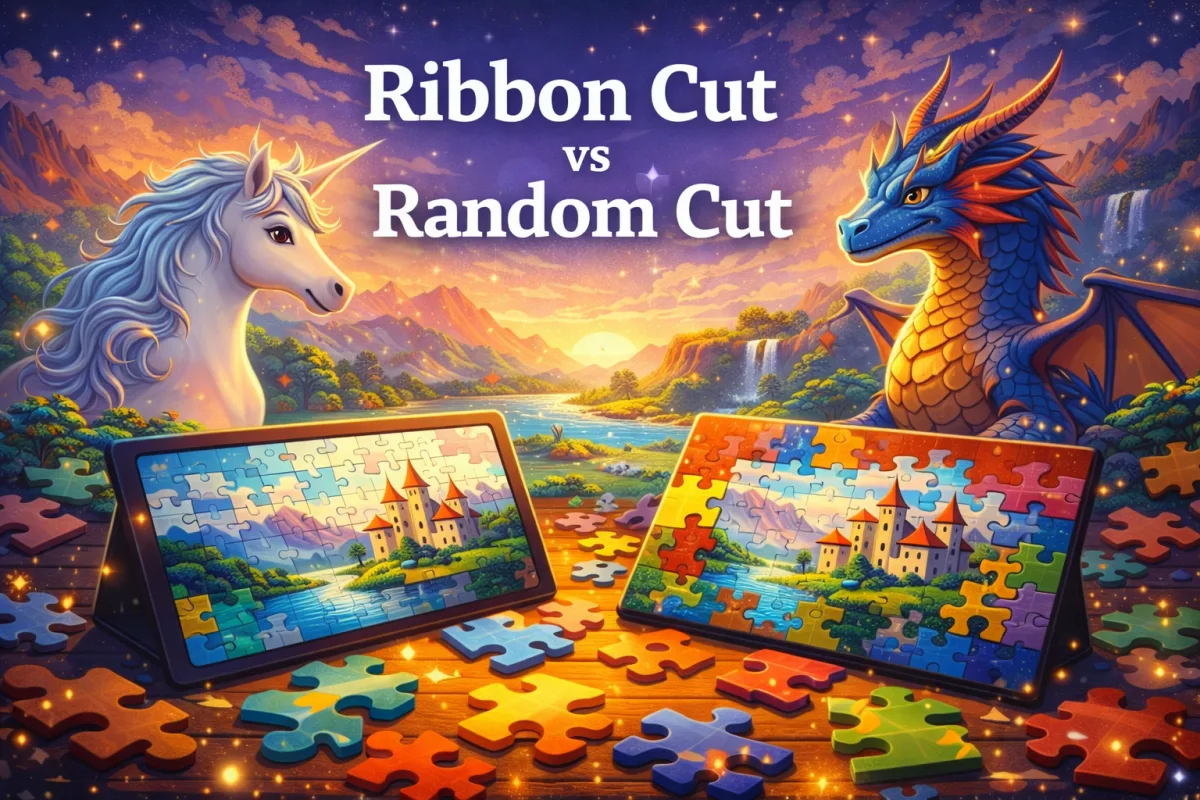
When choosing a jigsaw puzzle, most people focus on the image, piece count, or size. But there’s another detail that quietly changes the entire puzzling experience: the way the puzzle is cut. Two of the most common styles are ribbon cut and random cut.
At first glance, these terms may sound technical, but the difference becomes obvious as soon as you start assembling the puzzle. Ribbon cut and random cut puzzles feel different to work on, look different on the table, and guide the solving process in distinct ways. In this guide, we’ll explore what each cut style means and how it changes the overall puzzling experience.
What Does “Puzzle Cut” Mean?
The “cut” of a jigsaw puzzle refers to how the original image is divided into individual pieces. This determines the shape of each piece, how pieces connect to one another, and how predictable or varied the puzzle layout feels.
Cut style doesn’t change the image itself, but it strongly influences how puzzlers approach sorting, grouping, and building sections. That’s why two puzzles with the same image and piece count can feel surprisingly different to solve.
What Is a Ribbon Cut Jigsaw Puzzle?
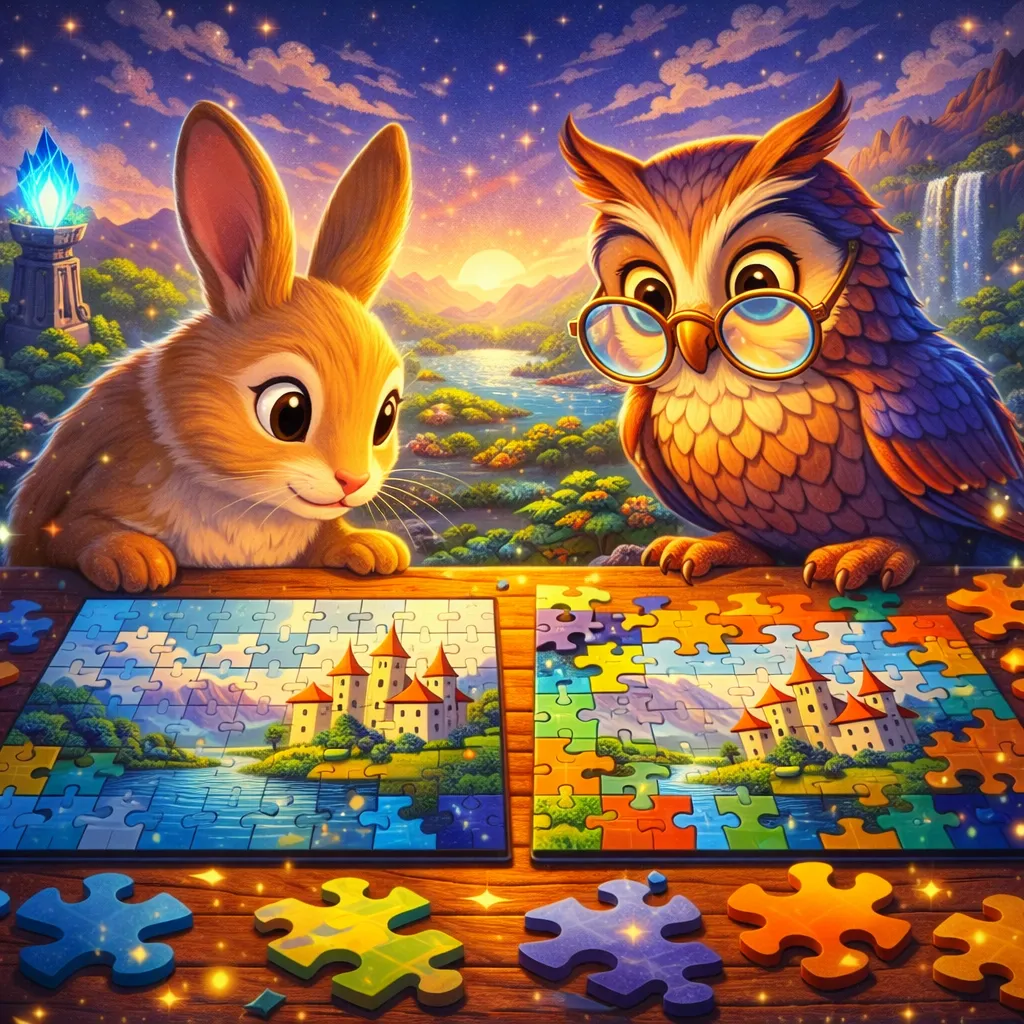
Ribbon cut is the most traditional and widely recognized puzzle cut style. In a ribbon cut puzzle, pieces are arranged in a grid-like pattern that runs horizontally and vertically across the image.
Most ribbon cut puzzles share these characteristics:
- Pieces are generally similar in size
- Each piece typically has four sides
- The overall layout follows a structured grid
- Piece shapes repeat across the puzzle
Because of this structure, ribbon cut puzzles often feel orderly from the start. Edges are easy to identify, rows and columns form naturally, and sections tend to come together in predictable ways.
What Is a Random Cut Jigsaw Puzzle?
Random cut puzzles take a very different approach. Instead of following a grid, each piece is cut individually, resulting in irregular shapes and sizes throughout the puzzle.
Common features of random cut puzzles include:
- Irregular piece shapes
- Greater variation in piece size
- Fewer repeating shapes
- A less structured overall layout
Because no two pieces look quite the same, random cut puzzles often feel more organic on the table. The puzzle grows in unexpected directions, and progress may feel less linear than with ribbon cut designs.
Key Differences Between Ribbon Cut and Random Cut
Although both cut styles create the same final image, the solving experience can feel quite different.
- Shape predictability: Ribbon cut pieces often look familiar, while random cut pieces feel more unique.
- Layout: Ribbon cut puzzles build in neat rows, while random cut puzzles grow more freely.
- Sorting style: Ribbon cut puzzles encourage sorting by edge and shape, while random cut puzzles rely more on visual details.
- Visual flow: Ribbon cut puzzles tend to reveal the image evenly, while random cut puzzles develop in clusters.
Neither approach is better or worse — they simply create different puzzling rhythms.
How Ribbon Cut Puzzles Usually Feel to Solve
Many puzzlers describe ribbon cut puzzles as structured and steady. Because the grid is predictable, it’s often easier to estimate where pieces belong. Progress feels consistent, especially once the edges and corners are complete.
This cut style is commonly chosen for:
- Large piece-count puzzles
- Landscapes and detailed scenes
- Group puzzling on a table
- Puzzlers who enjoy clear structure
The repeating shapes can also make sorting more systematic, which some puzzlers find satisfying.
How Random Cut Puzzles Usually Feel to Solve
Random cut puzzles are often described as visually playful and less predictable. Because each piece is unique, puzzlers tend to rely more on image details than on shape alone.
This cut style is often enjoyed by people who like:
- Unexpected piece connections
- Organic puzzle growth
- Highly varied piece shapes
- A less grid-like appearance
Random cut puzzles may feel less linear, but many puzzlers appreciate the sense of variety they bring to the table.
Which Puzzle Cut Do People Tend to Prefer?
Preference usually comes down to personal taste rather than skill level. Some puzzlers enjoy the order and predictability of ribbon cut puzzles, while others prefer the surprise and uniqueness of random cut designs.
It’s also common for puzzlers to enjoy both styles, choosing one or the other depending on mood, image type, or how much time they have available.
Ribbon Cut vs Random Cut in Digital Puzzles
Digital jigsaw puzzles can simulate both ribbon cut and random cut styles, even though no physical pieces are involved. The visual shape and connection logic still influence how the puzzle feels to solve.
Some online platforms, such as https://puzzlefree.game/, use digital piece designs that reflect traditional cutting styles, allowing players to experience different puzzle layouts without physical constraints.
In digital formats, cut style mainly affects visual organization and flow rather than physical handling, but the difference is still noticeable.
Choosing the Right Cut for Your Next Puzzle
If you’re unsure which cut to choose, consider these simple questions:
- Do you enjoy structured, orderly progress?
- Do you prefer predictable piece shapes or variety?
- Are you puzzling alone or with others?
- Do you like building in rows or clusters?
Your answers can help guide your choice, but experimenting with both styles is often the best way to discover what you enjoy most.
Conclusion: Ribbon Cut vs Random Cut
Ribbon cut and random cut puzzles offer two distinct ways to experience the same image. Ribbon cut puzzles provide structure and predictability, while random cut puzzles emphasize variety and visual discovery.
Neither style is superior — each simply shapes how the puzzle comes together. Understanding the difference can help you choose puzzles that match your preferences and make each puzzling session more enjoyable.
This article is for informational and entertainment purposes only. It describes common puzzling experiences and does not make educational, cognitive, or skill-related claims.
Frequently Asked Questions
- What is a ribbon cut jigsaw puzzle?
A ribbon cut puzzle uses a grid-based layout where pieces are similar in size and shape, creating a structured solving experience.
- What is a random cut jigsaw puzzle?
A random cut puzzle features irregular, unique piece shapes that create a more organic and varied layout.
- Are random cut puzzles harder than ribbon cut puzzles?
Some puzzlers find random cut puzzles feel less predictable, but difficulty largely