PuzzleFree
Dissectologist: Name for Jigsaw Puzzle Lovers
January 22, 2026
A clear name for a popular and thoughtful hobby
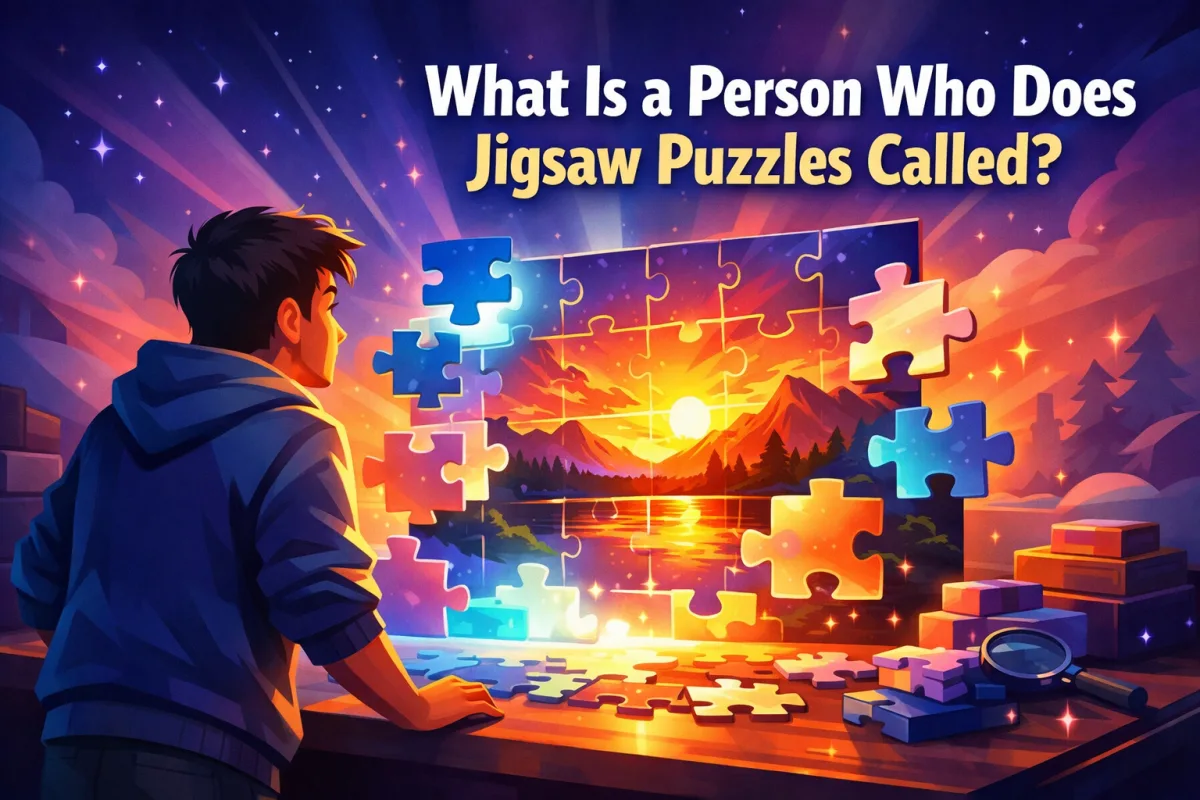
People who enjoy jigsaw puzzles are often surprised to learn that there is a proper term for what they do. While everyday language usually sticks to simple phrases like “puzzle lover” or “puzzle fan,” English has a more precise word that treats the activity as a defined hobby rather than a casual pastime.
This article explains what a person who does jigsaw puzzles is called, where the term comes from, and how it is used today. We’ll also look at related terms, common misconceptions, and how language around puzzles has evolved.
The correct term: Dissectologist
A person who does jigsaw puzzles is called a dissectologist.
The word comes from the early name for jigsaw puzzles: dissected maps. In the 18th century, puzzles were created by cutting maps into pieces to help teach geography. The verb “to dissect” referred to cutting something into parts, not to anatomy as we think of it today.
“The term dissectologist originates from ‘dissected maps,’ the earliest form of jigsaw puzzles used for education.”
So, a dissectologist is someone who enjoys assembling these dissected pieces back into a complete image.
Is “dissectologist” an official word?
Yes, though it is considered a niche term. You’ll find it in specialized dictionaries, puzzle communities, and historical references. It’s not commonly used in everyday conversation, but it is accurate and widely accepted among enthusiasts.

Common alternative terms (and why they exist)
Because “dissectologist” sounds formal and unfamiliar, people often use simpler descriptions. These aren’t wrong, but they are less specific.
Popular informal names
- Jigsaw puzzle enthusiast – neutral and descriptive
- Puzzle hobbyist – broader, can include many puzzle types
- Puzzle lover – emotional, informal language
- Puzzler – common, but vague
These terms are easier to understand instantly, which is why they dominate blogs, forums, and social media.
Why “puzzler” is not the same thing
The word “puzzler” often causes confusion. A puzzler may enjoy:
- Crosswords
- Logic puzzles
- Riddles
- Math or word games
A dissectologist, on the other hand, is specifically focused on jigsaw puzzles: visual assembly, spatial reasoning, and image reconstruction. The difference matters when you want to be precise.
How the term is used today
In modern usage, “dissectologist” appears most often in:
- Puzzle clubs and associations
- Competition rules and records
- Specialist books and magazines
- Online communities dedicated to jigsaw puzzles
Digital platforms, including online puzzle libraries like PuzzleFree.Game, usually prefer plain language for clarity. Still, the term remains useful when discussing the hobby in a formal or historical context.
Related concepts often associated with dissectologists
Skill sets
- Visual pattern recognition
- Spatial awareness
- Patience and sustained attention
- Problem decomposition
Typical preferences
- Piece counts (500, 1000, 2000+)
- Image styles (art, landscapes, abstract)
- Edge-first or color-first solving strategies
Quick terminology comparison
| Term | Specific to Jigsaw Puzzles | Formality Level |
|---|---|---|
| Dissectologist | Yes | High |
| Puzzler | No | Medium |
| Puzzle enthusiast | Sometimes | Low |
So, what should you call yourself?
If you want accuracy and a bit of tradition, dissectologist is the correct term. If you want clarity in everyday conversation, “jigsaw puzzle enthusiast” works just fine.
Both describe the same core idea: someone who enjoys the focused, satisfying process of turning scattered pieces into a complete picture.