PuzzleFree
Jigsaw Puzzles for Adults: Relaxing, Focused Hobby
January 18, 2026
A Calm, Structured Hobby for a Noisy World
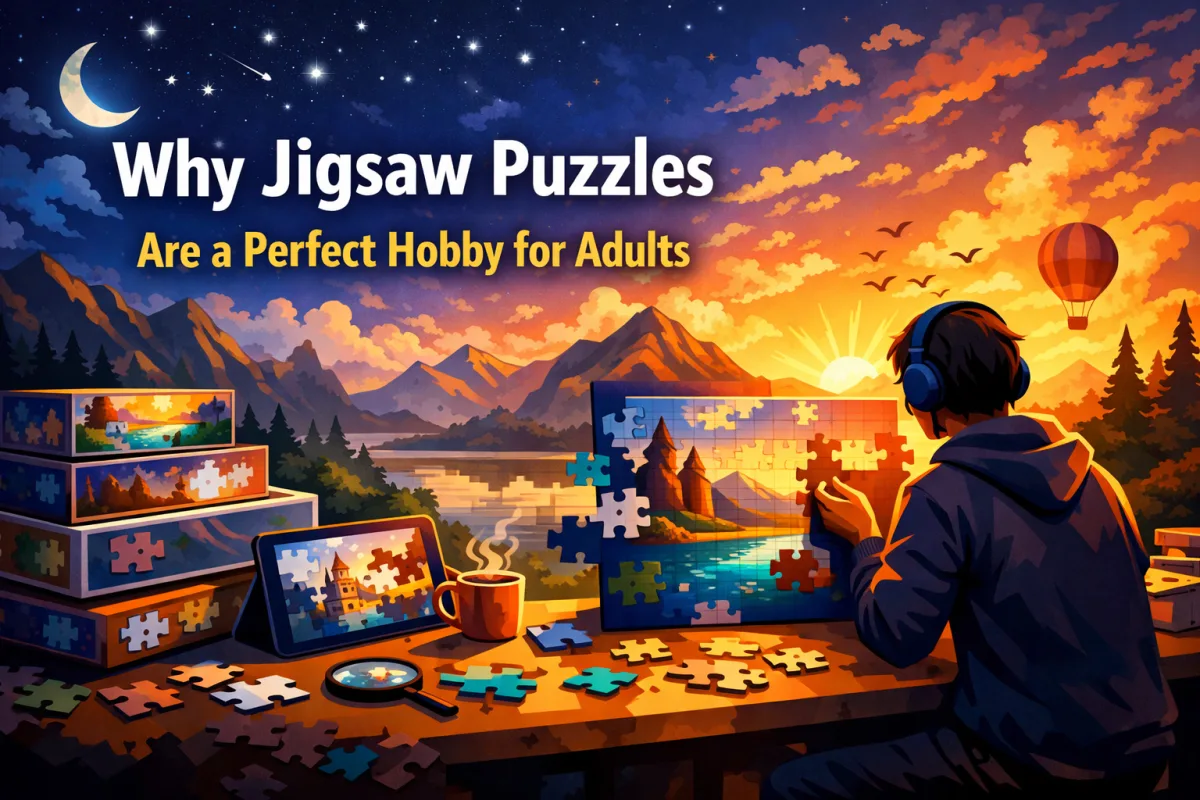
Jigsaw puzzles have quietly evolved from a childhood pastime into a well-defined adult hobby. Today, they are valued not for nostalgia, but for their ability to combine focus, relaxation, and gentle cognitive challenge in a single activity.
Unlike passive entertainment, puzzles require participation without pressure. You engage your hands and mind, but at your own pace. This balance makes jigsaw puzzles especially attractive for adults seeking calm structure after busy, mentally demanding days.
What Makes Jigsaw Puzzles an Adult Hobby?
As a concept, jigsaw puzzling is built around one clear goal: reconstructing a complete image from fragmented pieces. This simple structure creates a predictable, low-stress environment that adults often lack elsewhere.
Modern puzzles are no longer limited to simple landscapes or cartoon images. They now include abstract art, photography, minimalist designs, and complex visual patterns designed specifically for mature audiences.
Key Characteristics
- Clear objective with no time pressure
- Progress that is visible and measurable
- Flexible difficulty levels
- No dependency on fast reactions or competition
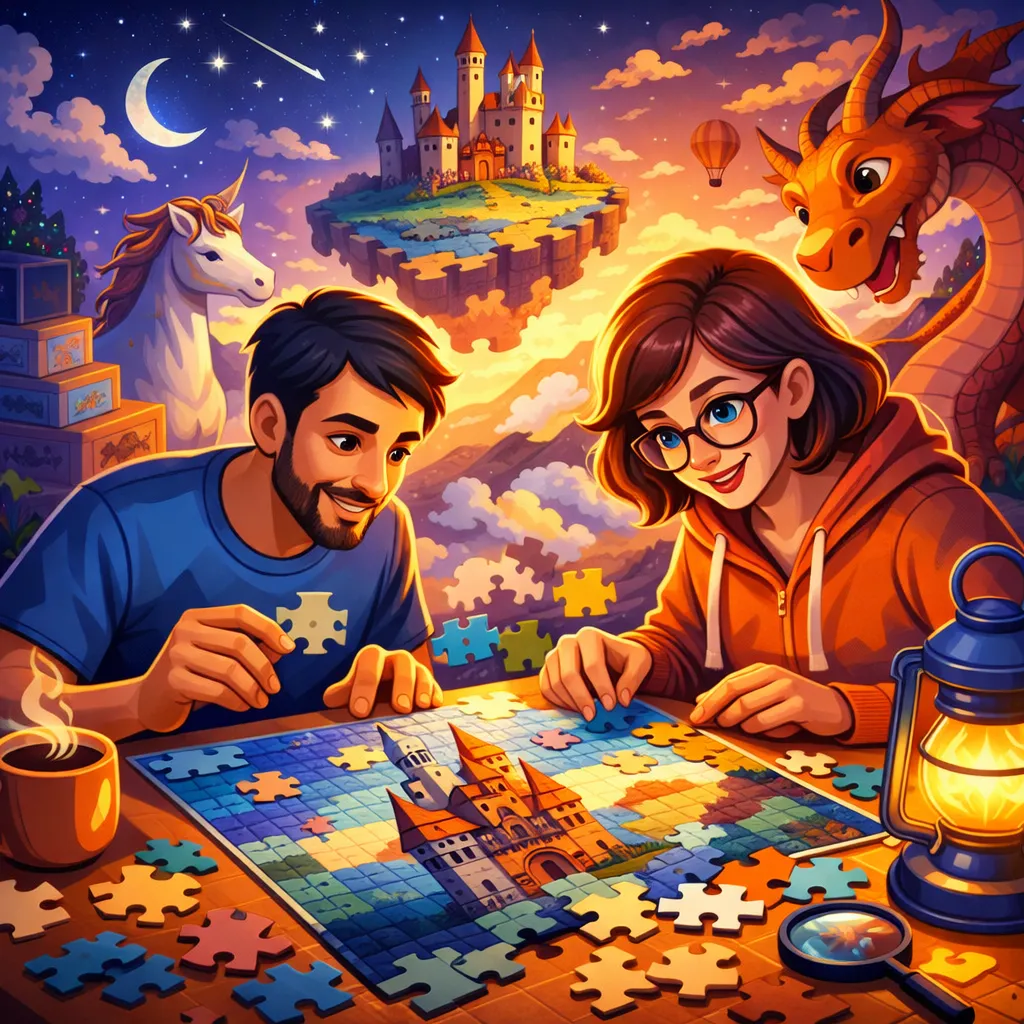
Mental Benefits Without Cognitive Overload
Jigsaw puzzles stimulate the brain gently. They activate spatial reasoning, pattern recognition, and working memory, but without overwhelming the nervous system.
This makes puzzles particularly suitable for adults who want mental engagement without the stress associated with learning new tools, systems, or rules.
“Puzzles create focused attention without urgency. That combination is rare in modern adult activities.”
Skills Engaged While Puzzling
- Visual-spatial processing
- Short-term memory
- Problem decomposition
- Attention control
Stress Reduction Through Active Focus
One of the most valuable aspects of jigsaw puzzles is their effect on stress. While solving a puzzle, attention narrows naturally. External concerns fade because the brain is fully occupied with a single, manageable task.
This state resembles what psychologists often describe as “soft focus” — attentive but relaxed, engaged but not strained.
Why This Matters for Adults
Many adult hobbies either demand high energy (sports, competitive games) or encourage passivity (endless scrolling, binge watching). Puzzles sit in the middle, offering active engagement without emotional spikes.
Flexibility That Fits Adult Lifestyles
Jigsaw puzzles adapt easily to adult schedules. You can work on a puzzle for five minutes or fifty, stop at any point, and resume without penalty.
This makes puzzling compatible with irregular routines, family life, and professional workloads.
| Aspect | Jigsaw Puzzles | Typical Digital Games |
|---|---|---|
| Time Commitment | Flexible, self-paced | Often session-based |
| Stress Level | Low | Medium to high |
| Failure Penalty | None | Often present |
| Progress Visibility | Immediate and visual | Abstract or score-based |
Analog and Digital Puzzles: Same Core Experience
Whether physical or digital, the core experience of puzzling remains the same. The medium changes, but the cognitive process does not.
Digital platforms, such as PuzzleFree.Game, extend accessibility by removing setup time and storage limits, while still preserving the essential logic and rhythm of puzzle solving.
Digital Formats Are Especially Useful When
- Space is limited
- You want adjustable difficulty
- You prefer short, repeatable sessions
- You enjoy image variety without physical clutter
A Hobby That Grows With You
Jigsaw puzzles scale naturally with experience. Beginners can start with fewer pieces and clear imagery. More experienced puzzlers can explore complex patterns, muted color palettes, or abstract compositions.
This gradual progression keeps the hobby relevant over years, not weeks.
Why Jigsaw Puzzles Endure
Jigsaw puzzles succeed as an adult hobby because they respect adult needs: autonomy, calm, and meaningful engagement. They do not compete for attention. They invite it.
In a world full of notifications and urgency, puzzling offers something increasingly rare — focused time that feels restorative rather than draining.