PuzzleFree
Relaxing Puzzles for Adults: Calm Focus & Jigsaw Joy
February 9, 2026
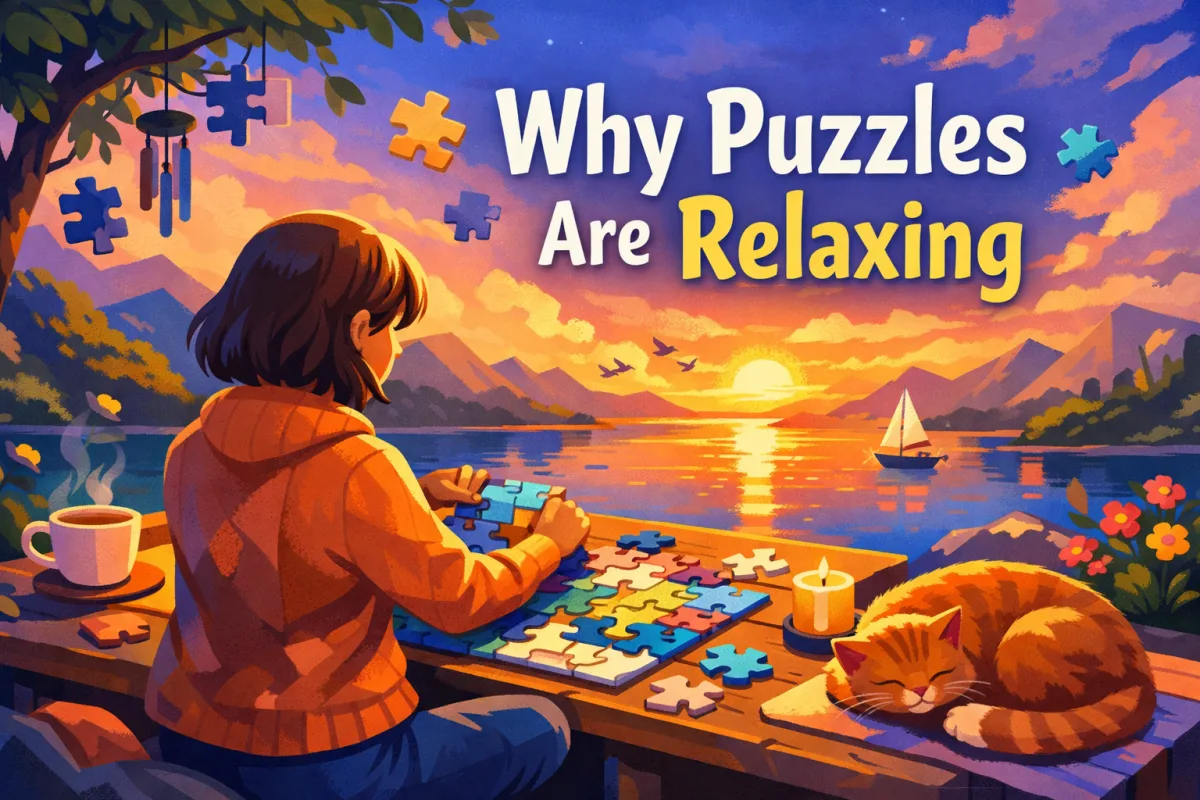
Many people describe puzzles as relaxing because they create a simple, self-contained task with clear rules and steady progress. When you sit down with a jigsaw, a crossword, or a logic puzzle, you’re not trying to “fix your life” or chase notifications—you’re just matching, sorting, and building something step by step. That gentle focus is exactly what makes puzzling feel like a small reset.
In this guide, we’ll look at why puzzles are relaxing from an everyday, experience-based perspective: how puzzles naturally hold attention, why they feel low-pressure, and how different formats (physical vs. digital, solo vs. social) change the vibe. No hype—just a practical explanation of what people tend to enjoy about puzzling.
Why Puzzles Feel Relaxing in the First Place
Puzzles often feel calming because they offer a rare mix of structure and freedom. The goal is clear—complete the image, fill the grid, solve the pattern—but you can approach it at your own pace. There’s no timer unless you choose one. No one is grading you. No “perfect” method is required.
That combination makes puzzles easy to return to. Even a short session can feel satisfying because you can always do something small: find two matching pieces, finish a corner, solve one clue, or tidy up a section. These tiny wins build a sense of momentum without pressure.
Gentle Focus: One Task, One Screen (Or No Screen)
A big reason people say puzzles are relaxing is that puzzling is naturally single-task. You’re scanning shapes, colors, patterns, or words—then making a simple decision: does this fit or not? That’s it. When the activity stays narrow and clear, it can feel like mental “decluttering.”
Unlike many modern activities that pull attention in ten directions, puzzles reward staying with one thing. Many puzzlers enjoy that quiet, steady engagement—especially after a day full of messages, switching tabs, and juggling priorities.
Low-Pressure Progress: You Can’t “Fail” a Puzzle
Puzzles usually have a comforting quality: you can pause, restart, change strategy, or walk away without losing anything important. If a piece doesn’t fit, you simply try a different spot. If a clue feels hard, you skip it and return later. This creates a low-stakes rhythm that people often associate with relaxation.
Even challenging puzzles can feel relaxing when the difficulty is right for your mood. Some days call for something easy and quick. Other days, a bigger challenge feels better because it holds your attention longer. The key is choosing a level that feels engaging, not exhausting.
The Satisfying Rhythm of Repetition
Puzzling involves repeated, small actions: pick a piece, test a match, rotate, compare, place. Or read a clue, try a word, erase, adjust, continue. Repetition can feel soothing because it creates a predictable loop. You don’t need to reinvent the process every minute—you just keep moving forward.
Many relaxing hobbies share this same quality: they’re built on small steps that add up. Puzzles fit perfectly into that category, especially when you give yourself permission to go slow.
From Chaos to Order: The Visual Comfort of “Making Sense”
Jigsaw puzzles, in particular, have a strong visual payoff. At the start, pieces look like chaos. As you sort edges, group colors, and build sections, the picture slowly becomes clearer. A lot of people find that gradual shift—from scattered fragments to recognizable structure—feels oddly comforting.
It’s not about “improving” anything. It’s simply the pleasant feeling of bringing order to something messy, one tiny decision at a time.
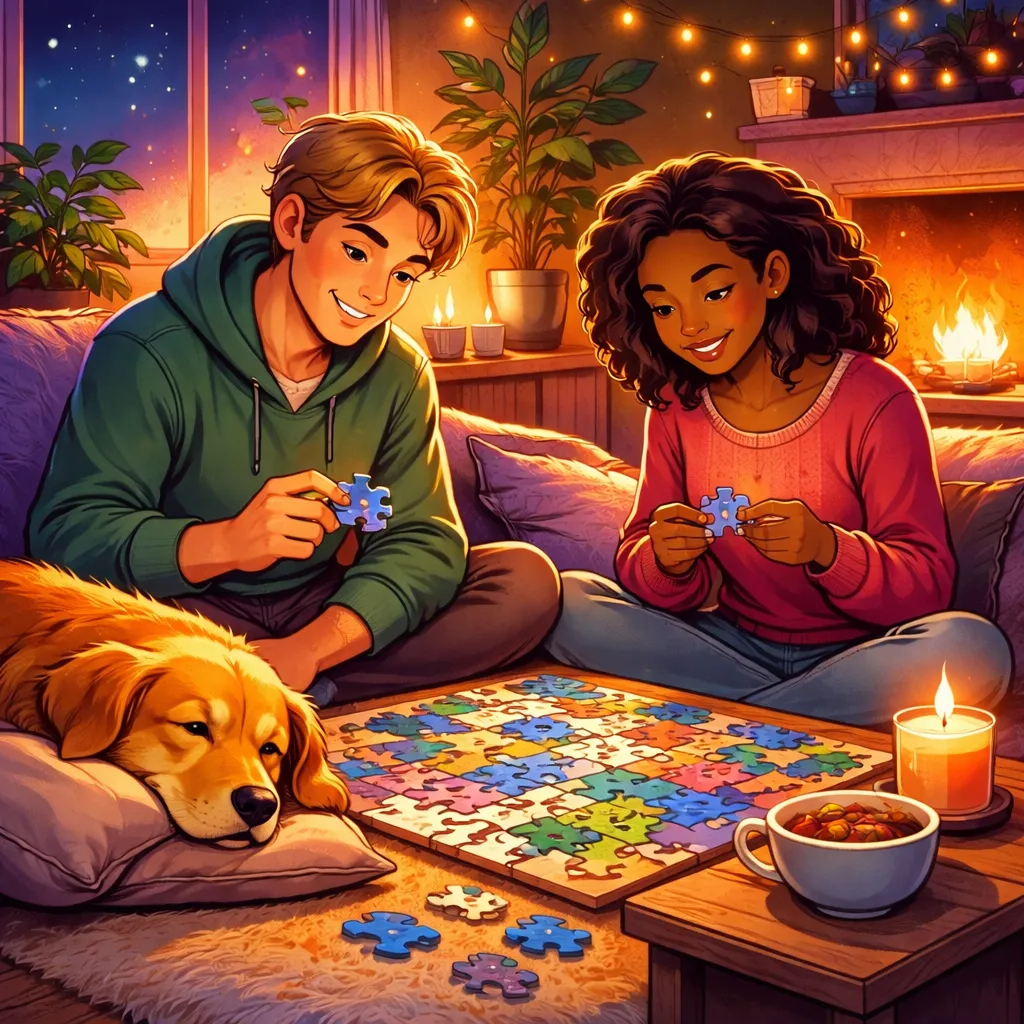
Why Jigsaw Puzzles Are Often Described as Extra Relaxing
Jigsaws combine several relaxing elements in one activity:
- Visual scanning (colors, patterns, details)
- Hands-on interaction (moving pieces, testing matches)
- Clear feedback (pieces fit or they don’t)
- Visible progress (sections grow and connect)
That mix is one reason why many people pick jigsaws when they want a calm evening activity. It’s easy to start, easy to pause, and the pace is entirely yours.
Physical vs. Digital Puzzles: Different Ways to Unwind
Both physical and digital puzzles can feel relaxing—just in slightly different ways.
Physical puzzles
- Tactile feel: handling pieces on a table feels grounded and “offline.”
- Shared space: a puzzle on a table can become a gentle, ongoing home activity.
- Fewer distractions: you can puzzle without pop-ups or alerts.
Digital puzzles
- Convenience: no setup, no cleanup, no missing pieces.
- Flexible difficulty: change piece count or settings quickly.
- Anywhere access: puzzle in short sessions on different devices.
If you enjoy digital jigsaws, browser-based platforms like PuzzleFree.Game let you play without downloads, which can be ideal for quick, low-effort sessions.
Solo vs. Social Puzzling: Two Relaxing Modes
Puzzles work well both solo and with others, and each mode can feel relaxing in its own way.
Solo puzzling
Solo sessions often feel peaceful because you control everything: the pace, the difficulty, the music (or silence), and how long you stay with it. Many people like solo puzzling as a quiet break that doesn’t demand conversation or decision-making beyond the puzzle itself.
Social puzzling
Group puzzling can feel surprisingly calm because it’s a shared activity that doesn’t require constant talking. People can chat, stay quiet, or switch between both naturally. The puzzle gives everyone something to do, which keeps the mood easy and low-pressure.
Making Puzzles Part of a Relaxing Routine
If you want puzzles to feel more relaxing (and less like a challenge), small choices make a big difference:
- Pick the right difficulty for today: easier when you’re tired, harder when you want deep focus.
- Set a cozy environment: good lighting, comfortable seating, minimal clutter.
- Use short sessions: 10–20 minutes can be enough to unwind.
- Keep it optional: stop when it stops feeling enjoyable.
Some people like puzzles as a “wind-down” activity in the evening because it’s quiet and steady. If you try this, choose puzzles that feel pleasant—not the ones that trigger frustration.
Common Misconceptions About Relaxing Puzzles
“Relaxing puzzles must be easy.”
Not always. Many people find a moderate challenge more relaxing because it holds attention. Too easy can feel boring. Too hard can feel irritating. The sweet spot depends on your mood.
“You have to finish a puzzle in one sitting.”
Nope. Leaving a puzzle in progress is normal. In fact, long puzzles can feel relaxing precisely because you can return to them in small, pressure-free sessions.
“Puzzles are only for kids or older adults.”
Puzzles come in endless themes and styles, from quick daily puzzles to big, detailed jigsaws. The relaxing part is not age—it’s the pace and the experience.
Conclusion: Why Puzzles Are Relaxing for So Many People
Puzzles are relaxing for many people because they’re simple, structured, and gently engaging. They offer calm focus, low-pressure progress, and a satisfying sense of “building something” without outside noise. Whether you prefer physical jigsaws on a table or digital puzzles you can open instantly, the relaxing part comes from the same place: one clear task, one step at a time.
This article is for informational and entertainment purposes only. It describes common user experiences with puzzles and does not make medical, educational, or cognitive outcome claims.
Frequently Asked Questions
- Why are puzzles considered a relaxing activity?
Many people find puzzles relaxing because they create calm focus: one clear task, steady progress, and a low-pressure pace you can control.
- Why do jigsaw puzzles feel especially calming?
Jigsaws combine visual scanning, hands-on piece movement, and clear feedback. The gradual building of the image also makes progress feel easy to notice.
- Are puzzles relaxing even if they’re challenging?
They can be, as long as the difficulty matches your mood. A moderate challenge often keeps attention engaged without feeling overwhelming.
- Are digital puzzles as relaxing as physical puzzles?
They can be. Physical puzzles offer a tactile, offline feel, while digital puzzles offer convenience, flexible difficulty, and no missing pieces.
- Is puzzling better alone or with other people?
Both can be relaxing. Solo puzzling is quiet and self-paced, while group puzzling can feel calm because the shared activity reduces social pressure.
- How can I make puzzles feel more relaxing?
Choose a comfortable difficulty, puzzle in short sessions, and set up a cozy space with good lighting and minimal distractions.