PuzzleFree
Puzzles for Focus: Calm, Pressure-Free Concentration
February 9, 2026
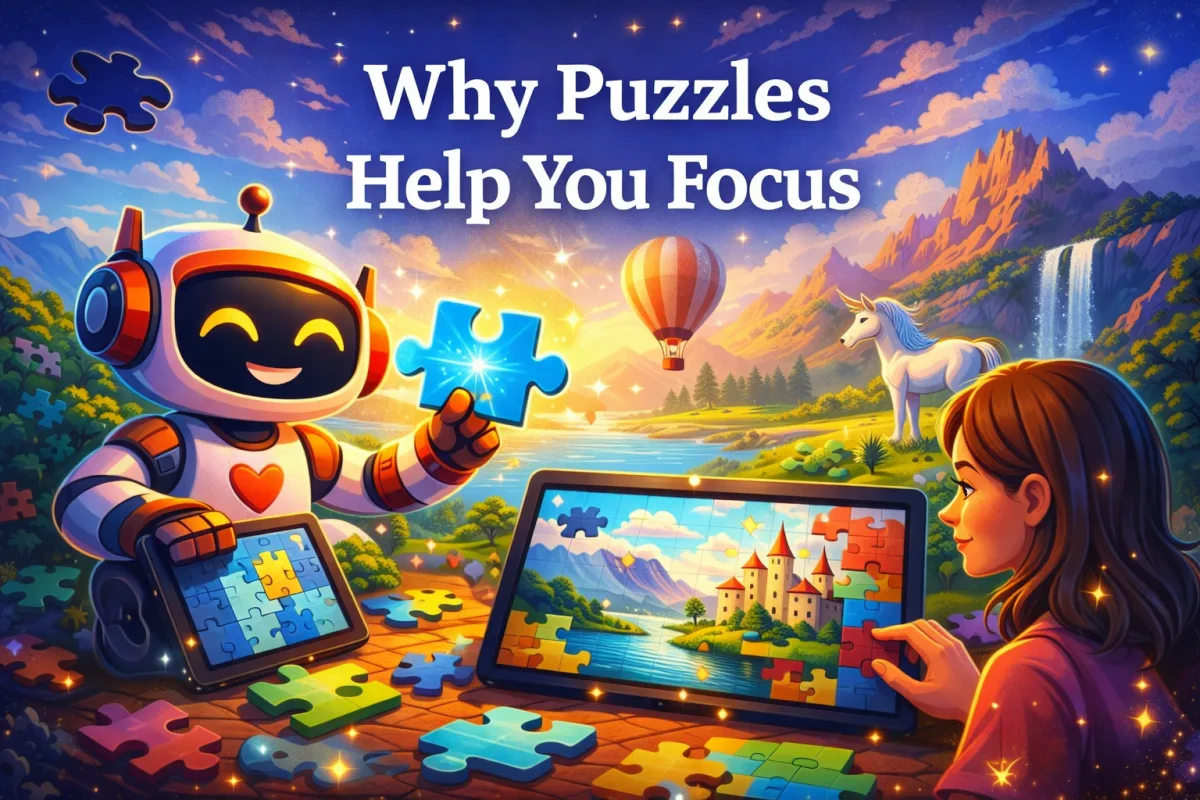
Many people notice that puzzles are easier to focus on than many other activities. Not because they demand intense effort, but because they create a calm, contained task with clear rules and steady progress. When you work on a puzzle, your attention naturally settles on one simple goal at a time — matching pieces, spotting patterns, or completing small sections.
This article explores why puzzles help you focus in a gentle, low-pressure way. Rather than forcing concentration, puzzles often make it feel natural. We’ll look at how structure, rhythm, and simplicity contribute to calm concentration, and why puzzles are commonly chosen when people want quiet focus without stress.
What “Gentle Focus” Means in Everyday Life
Gentle focus isn’t about pushing yourself to concentrate harder. It’s about choosing an activity that naturally holds your attention without demanding constant decisions or multitasking. Many people describe puzzles as fitting perfectly into this category.
When puzzling, your attention stays on one narrow task: finding a match, testing a piece, or filling in a small area. There’s no pressure to rush, no expectation to perform, and no penalty for stepping away. That combination often makes it easier to stay focused for longer than expected.
Why Puzzles Feel Easier to Focus On Than Many Activities
Modern life often requires switching between tasks, messages, and screens. Puzzles work differently. They invite you to stay with one activity from start to finish, without interruptions built into the experience.
Because puzzles don’t rely on notifications, updates, or constant input, they naturally reduce distraction. Many people find that once they begin puzzling, their attention stays anchored simply because there’s nothing competing for it.
Single-Task Attention Without Multitasking
Puzzles are designed around single-task attention. You aren’t expected to juggle multiple goals or track several streams of information at once. Instead, you repeat a simple cycle: look, try, adjust, continue.
This single-task structure is one reason puzzles are often described as calm concentration activities. The task remains the same throughout the session, which makes it easier to stay present without feeling mentally scattered.
Low-Pressure Concentration You Control
Another reason puzzles help people focus is the absence of pressure. There’s no fixed deadline unless you choose one. You can pause, change strategies, or stop entirely without losing progress.
This sense of control makes focusing feel optional rather than forced. Many people find it easier to concentrate when they know they can walk away at any moment.
Repetition and Rhythm as Focus Anchors
Puzzling involves small, repeated actions: selecting pieces, testing fits, rotating shapes, or scanning patterns. These repeated steps create a steady rhythm that many people find grounding.
Instead of demanding constant creativity or decision-making, puzzles allow you to stay within a predictable process. That repetition can make it easier to remain focused without mental fatigue.
Visual Structure and Clear Goals
Clear goals play an important role in calm focus. In puzzles, the objective is always visible — complete the picture, fill the grid, solve the pattern. You don’t have to wonder what to do next.
Jigsaw puzzles, in particular, offer visual structure that guides attention naturally. Sorting edges, grouping colors, and building sections provide clear next steps, which helps attention stay steady.

Physical vs. Digital Puzzles and Focus Style
Both physical and digital puzzles support focused attention, but in slightly different ways.
Physical puzzles
- Encourage hands-on interaction
- Limit screen-related distractions
- Create a shared, visible workspace
Digital puzzles
- Offer quick access and easy setup
- Allow flexible difficulty adjustments
- Make short focus sessions convenient
Some browser-based platforms, such as https://puzzlefree.game/, let people start puzzling instantly without downloads, which can be useful for brief, focused breaks.
Solo Puzzling as Calm Concentration Time
Many people choose puzzles as a solo activity when they want quiet focus. Solo puzzling removes social pressure and allows complete control over pace and difficulty.
At the same time, puzzles don’t require intense isolation. You can puzzle with background music, in silence, or alongside others doing their own activities. This flexibility makes puzzles easy to fit into different environments.
Making Puzzles Work for Focus
If your goal is calm concentration, a few simple choices can help:
- Choose a difficulty that feels engaging but not frustrating
- Use short sessions instead of long marathons
- Set up a comfortable, low-distraction space
- Allow yourself to stop whenever focus fades
Focus tends to come more naturally when the activity feels optional and enjoyable.
Conclusion: Why Puzzles Encourage Calm Focus
Puzzles help many people focus because they combine structure, repetition, and clear goals without pressure. They offer a single task, steady rhythm, and freedom to pause — all of which make concentration feel easier and more natural.
Whether physical or digital, solo or shared, puzzles provide a simple way to practice calm concentration without forcing attention or chasing productivity.
This article is for informational and entertainment purposes only. It describes common user experiences with puzzles and does not make medical, psychological, or cognitive outcome claims.
Frequently Asked Questions
- Why do puzzles help people focus?
Many people find puzzles easier to focus on because they offer one clear task at a time and a low-pressure pace.
- Are puzzles considered calm concentration activities?
Puzzles are often described this way because they encourage steady attention without deadlines or multitasking.
- Do digital puzzles support focused activities?
Yes, digital puzzles can support focused sessions by offering quick access, flexible difficulty, and progress saving.
- Is solo puzzling better for focus?
Solo puzzling allows full control over pace and environment, which many people find helpful for calm concentration.
- How long should a focus-based puzzle session be?
Short sessions of 10–20 minutes are often enough to enjoy focused puzzling without feeling tired.